Evolution of RNG Algorithms in Digital Keno, Bingo, and Lottery Systems
Written by Yves Friedrich · Sep 2, 2026
Evolution of RNG Algorithms in Digital Keno, Bingo, and Lottery Systems
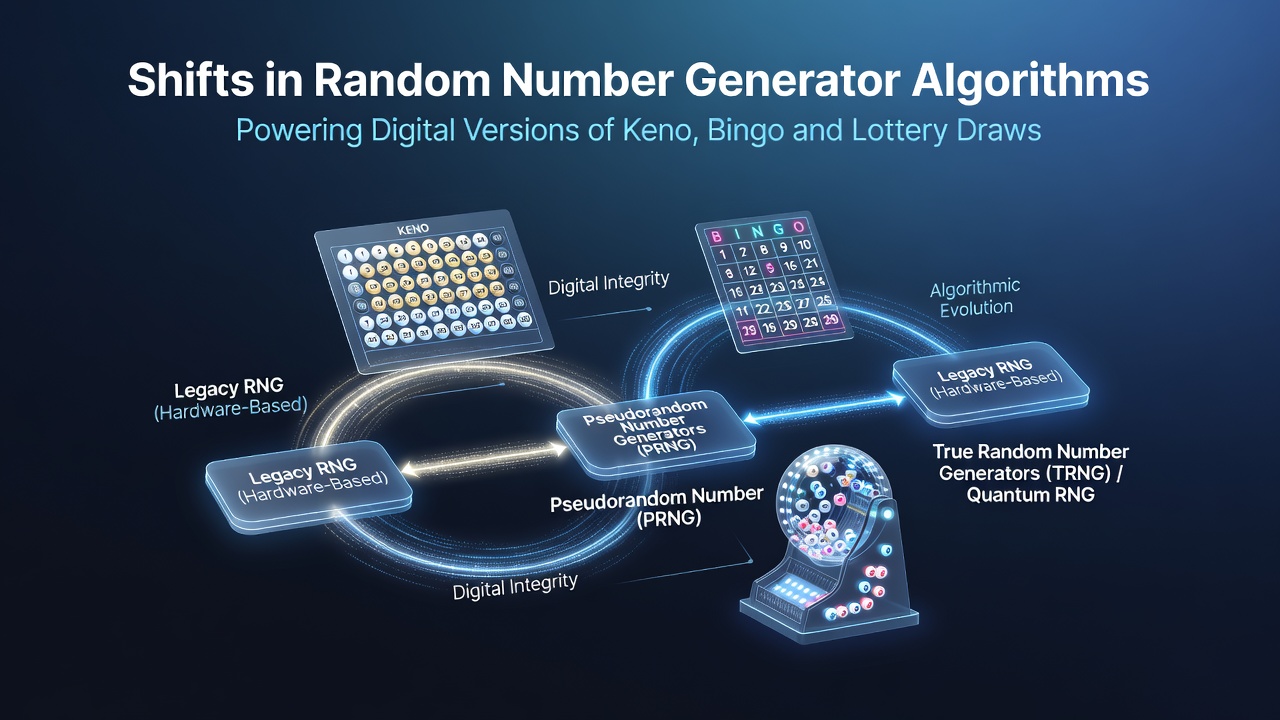
Random number generators form the core mechanism behind digital versions of keno, bingo, and lottery draws, and observers note that these algorithms have undergone substantial technical shifts since the early days of online gaming platforms. Early implementations relied heavily on pseudorandom number generators such as the Mersenne Twister, which produced sequences through deterministic mathematical formulas seeded by system time or other inputs. Those systems delivered adequate speed for basic operations yet faced scrutiny when cryptographic analysis revealed potential predictability under certain conditions.
Transition from Basic PRNG to Cryptographic Standards
Research indicates that developers began migrating toward cryptographically secure pseudorandom number generators around the mid-2010s, incorporating algorithms like AES in counter mode or ChaCha20 to resist state reconstruction attacks. This change addressed regulatory demands for unpredictability that standard statistical tests alone could not guarantee. Data from industry reports shows that many operators updated their systems to meet testing suites outlined by organizations such as NIST, which publishes detailed specifications for randomness verification.
Hardware random number generators entered wider use as well, drawing entropy from physical phenomena including thermal noise or quantum fluctuations. These true RNG devices supplement software layers and reduce reliance on purely algorithmic sequences. Studies conducted by research institutions in Canada and Australia demonstrate that hybrid approaches combining hardware entropy sources with post-processing functions achieve higher entropy rates while maintaining the throughput required for frequent draws in keno and bingo games.
Regulatory and Certification Influences on Algorithm Selection
Certification bodies across multiple jurisdictions now require independent laboratory evaluation of RNG implementations before deployment. Figures from European and North American testing labs reveal that failure rates for initial submissions have declined as vendors adopt standardized libraries and documented seeding practices. In September 2026, updated guidelines from several international standards groups are scheduled to emphasize continuous entropy monitoring during live operation rather than one-time certification snapshots.
Operators serving lottery markets must also document how algorithms handle edge cases such as power interruptions or network latency. Those who have examined audit reports note that failures in these areas often stem from implementation details rather than the core algorithm itself. Bingo platforms, which frequently run multiple concurrent games, benefit from parallelizable RNG designs that maintain statistical independence across separate streams.
Quantum and Post-Quantum Considerations Emerging
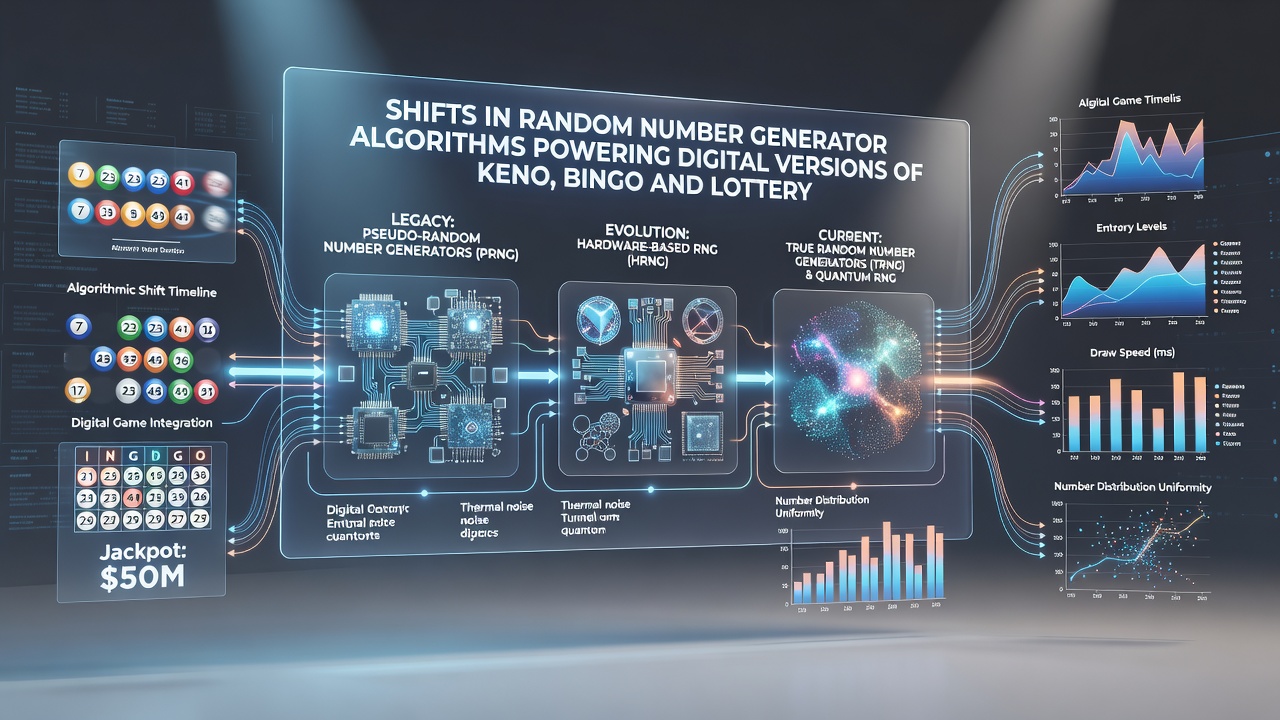
Academic papers published in 2024 and 2025 explore the integration of quantum random number generators into gaming infrastructure. These systems exploit photon arrival times or other quantum processes to produce bits that cannot be predicted even with complete knowledge of the device state. Although current adoption remains limited to high-stakes lottery environments due to cost and stability factors, pilot programs in several jurisdictions indicate measurable improvements in entropy quality metrics.
Post-quantum cryptography standards influence RNG design indirectly because future regulatory frameworks may require resistance to quantum computing attacks on both the generator and any associated cryptographic signing of draw results. Researchers at institutions tracking these developments report that lattice-based and hash-based signature schemes are already appearing in test environments for keno and bingo platforms.
Performance and Scalability Impacts
Modern RNG pipelines must handle thousands of simultaneous draw requests without introducing latency that players notice. Profiling data collected from large-scale deployments shows that well-optimized cryptographic implementations can sustain required rates on commodity server hardware while still passing rigorous statistical batteries such as Dieharder and NIST STS. Operators have observed that moving entropy generation to dedicated hardware cards frees CPU cycles for game logic and result presentation.
Cloud-based deployments introduce additional variables including virtual machine isolation and shared entropy pools. Guidelines from regional gaming authorities stress the importance of isolating RNG instances per jurisdiction to prevent cross-contamination of random streams. Those responsible for compliance documentation frequently reference containerization techniques that allow independent seeding and state management for each regional lottery or bingo offering.
Conclusion
Shifts in RNG algorithms for digital keno, bingo, and lottery draws continue to reflect advances in cryptography, hardware capabilities, and regulatory expectations. Documentation from testing laboratories and standards organizations shows steady movement toward stronger entropy sources and more robust verification methods. As of September 2026, further refinements tied to quantum technologies and continuous monitoring protocols are expected to shape the next phase of implementation across the sector.