Evolving Demographics in Regulated Digital Keno and Bingo Communities
Written by Yves Friedrich · Jun 14, 2026
Evolving Demographics in Regulated Digital Keno and Bingo Communities
Digital keno and bingo have attracted growing numbers of participants in regulated markets over recent years, with data revealing clear shifts in who joins these communities. Regulatory bodies across North America and Australia track participation closely, and figures from mid-2025 through projections into June 2026 show steady changes in age ranges, gender balances, and regional concentrations. These patterns emerge from licensed platforms operating under frameworks that require detailed reporting on user activity.
Age Distribution Across Platforms
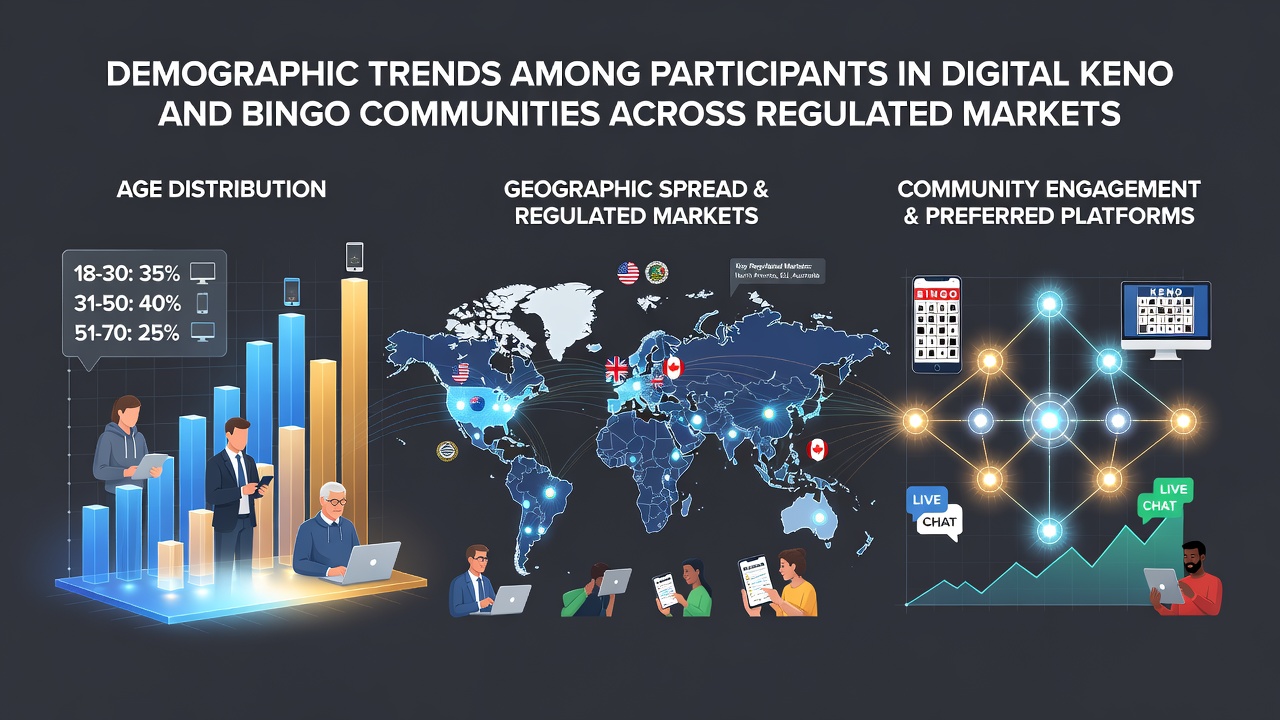
Younger adults between 25 and 34 now represent a larger share of digital keno players than they did five years earlier, while bingo continues to draw a broader spread that includes significant numbers over 55. Reports compiled by the Alcohol and Gaming Commission of Ontario indicate that keno sessions in that jurisdiction see roughly 38 percent of active accounts held by users in the 25-34 bracket as of early 2026, compared with 29 percent in the same group during 2021. Bingo communities, by contrast, maintain stronger representation from older cohorts, although operators note rising engagement from players aged 35 to 44 who access games through mobile apps during evening hours.
Those who study these markets point out that accessibility through smartphones has narrowed gaps between generations, allowing older participants to maintain involvement while newer users experiment with faster-paced keno variants. Data collected from state-licensed sites in New Jersey and Pennsylvania further supports this trend, showing gradual increases in accounts registered by individuals under 30 since 2023.
Gender Participation Patterns
Bingo communities in regulated environments continue to show higher female participation rates, often exceeding 60 percent of active users according to aggregated reports from multiple jurisdictions. Keno draws a more balanced split, with male users slightly ahead in several markets yet female engagement rising steadily on platforms that offer themed rooms and community chat features. Observers tracking these figures note that promotional campaigns aimed at social play have contributed to the gradual shift, particularly in Australian states where digital bingo operators publish quarterly summaries of player demographics.
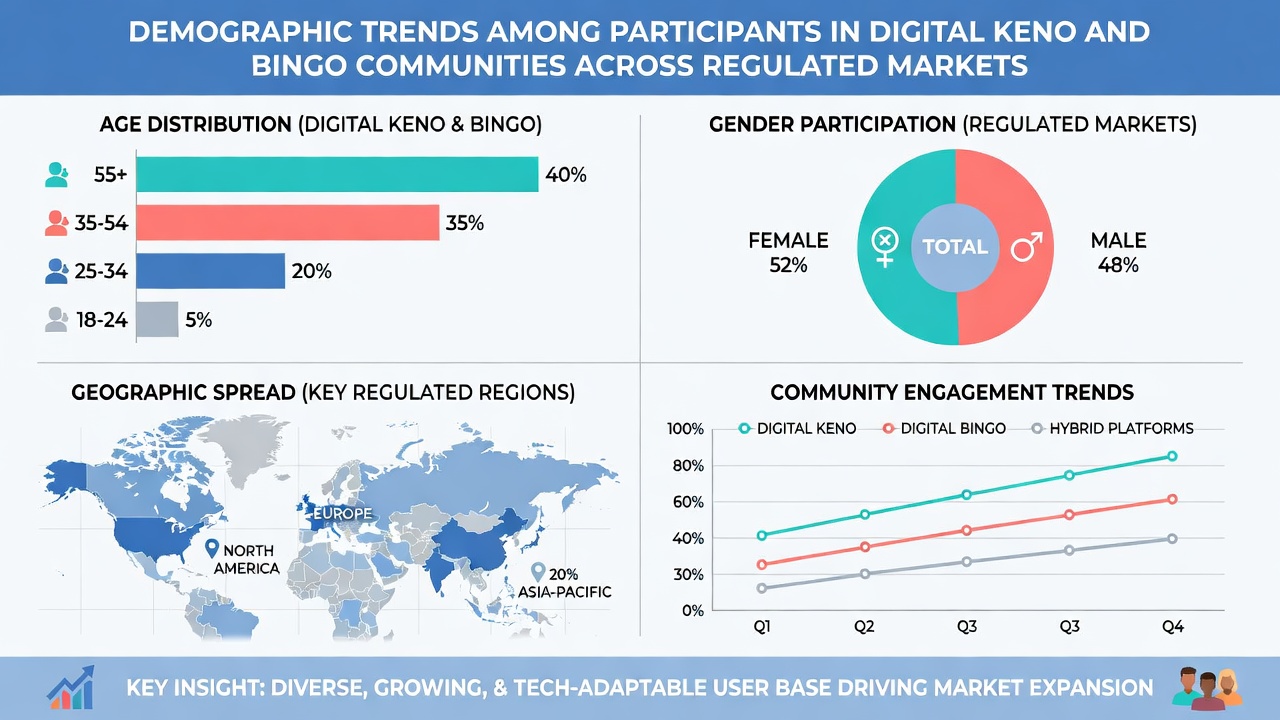
One study released by researchers at the University of Nevada, Reno examined login patterns across ten licensed operators and found that women aged 40 to 55 frequently participate in bingo sessions lasting 45 minutes or longer, whereas male users in the same age range tend toward shorter keno rounds. These differences appear consistent across the sampled markets and align with broader industry data released in spring 2026.
Geographic and Market Variations
Participation rates vary noticeably by region, influenced by local licensing rules and internet penetration. Canadian provinces with established online frameworks report higher overall engagement among urban residents, while rural users show stronger preference for bingo formats that emphasize group interaction. In contrast, several European markets outside the UK display elevated keno activity among cross-border players who access sites licensed in Malta or Gibraltar. Australian regulators document similar urban-rural divides, with digital keno growing fastest in New South Wales and Victoria where population density supports frequent micro-transactions.
Those who monitor cross-market trends highlight that regulatory updates effective in 2025 encouraged operators to expand responsible gaming tools, which in turn influenced registration data by attracting users who previously avoided online play. Projections extending to June 2026 suggest continued modest growth in both games, driven largely by existing demographic groups rather than entirely new cohorts.
Socioeconomic and Behavioral Indicators
Income levels among participants span a wide range, yet data from licensed platforms indicate that middle-income households account for the majority of regular activity in both keno and bingo. Employment status also correlates with session timing, as shift workers often log in during off-peak hours while salaried professionals favor weekend tournaments. Researchers examining transaction records note that average spend per session remains relatively stable across income brackets when adjusted for game speed and prize structures.
Community features such as chat functions and leaderboards appear to strengthen retention among users who value social elements, particularly in bingo rooms where repeated participation builds recognizable player groups. Keno communities, while more solitary by nature, still show loyalty increases when operators introduce loyalty programs tied to cumulative play volume.
Conclusion
Demographic trends in regulated digital keno and bingo communities reflect broader changes in technology access and regulatory oversight. Age groups, gender balances, and regional concentrations continue to evolve as operators adapt offerings to meet documented player preferences. Figures compiled through 2025 and into 2026 provide a factual basis for understanding these shifts without speculation on future outcomes beyond available data.