Shifting Player Bases: Sports Betting Draws Younger Crowds While Slots Retain Traditional Appeal
Written by Yves Friedrich · Aug 20, 2026
Shifting Player Bases: Sports Betting Draws Younger Crowds While Slots Retain Traditional Appeal
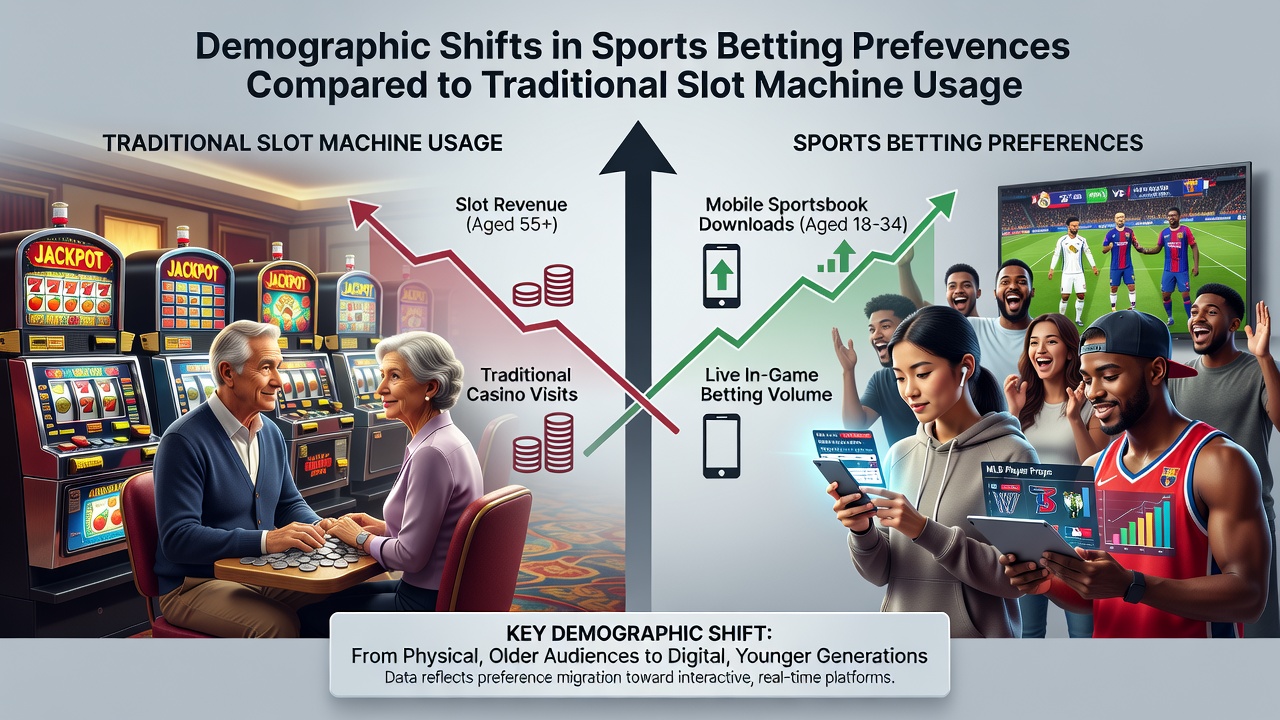
Demographic patterns in gambling activities reveal clear distinctions between sports betting enthusiasts and those who prefer traditional slot machines, with data collected through 2026 indicating ongoing realignment across age groups, genders, and geographic locations. Researchers tracking participation rates note that sports betting attracts a higher proportion of individuals aged 18 to 34, while slot machine usage remains concentrated among players aged 45 and older, according to reports from the American Gaming Association. These trends emerge from surveys conducted in North American markets where mobile platforms facilitate rapid access to live event wagering.
Statistics from Canadian provincial gaming authorities show that sports betting accounts for approximately 28 percent of total gambling revenue among younger adults in Ontario and British Columbia, compared to just 9 percent for slot machines in the same cohort. Observers note that this preference aligns with greater comfort using smartphone applications for in-game bets during major leagues such as the NFL and NBA. In contrast, slot machine play continues to draw steady foot traffic in physical venues among older demographics who value the repetitive mechanics and immediate visual feedback of reel-based games.
Age-Based Participation Trends Through Mid-2026
Figures compiled by the Australian Gambling Research Centre indicate that sports betting participation among 25- to 34-year-olds increased by 14 percent between 2023 and 2026, driven by expanded legal frameworks in several states and territories. Those same datasets reveal slot machine engagement in the same age bracket remained flat, with only marginal growth in online variants. People in the 55-plus category, however, maintained slot machine preference at rates exceeding 60 percent of their gambling activity, often citing familiarity with casino floors and loyalty programs that reward consistent play.
University studies from institutions in Nevada have examined how generational exposure influences these choices, finding that individuals who grew up with digital streaming services gravitate toward interactive sports interfaces offering real-time odds adjustments. This stands in contrast to slot players who report lower interest in live event synchronization. Data from August 2026 surveys conducted across U.S. tribal gaming operations further confirms that sportsbooks located inside casinos capture a larger share of first-time visitors under age 40 than dedicated slot areas.
Gender and Regional Variations in Activity Selection
Gender distributions add another layer to these patterns, with men comprising roughly 72 percent of sports betting accounts in European markets tracked by national statistics agencies, whereas slot machine play shows a more balanced split approaching 55 percent female participants in the same jurisdictions. Research indicates that women in the 35- to 50-year-old range increasingly combine both activities, using sports wagering for occasional major events while reserving slots for routine entertainment during casino visits.
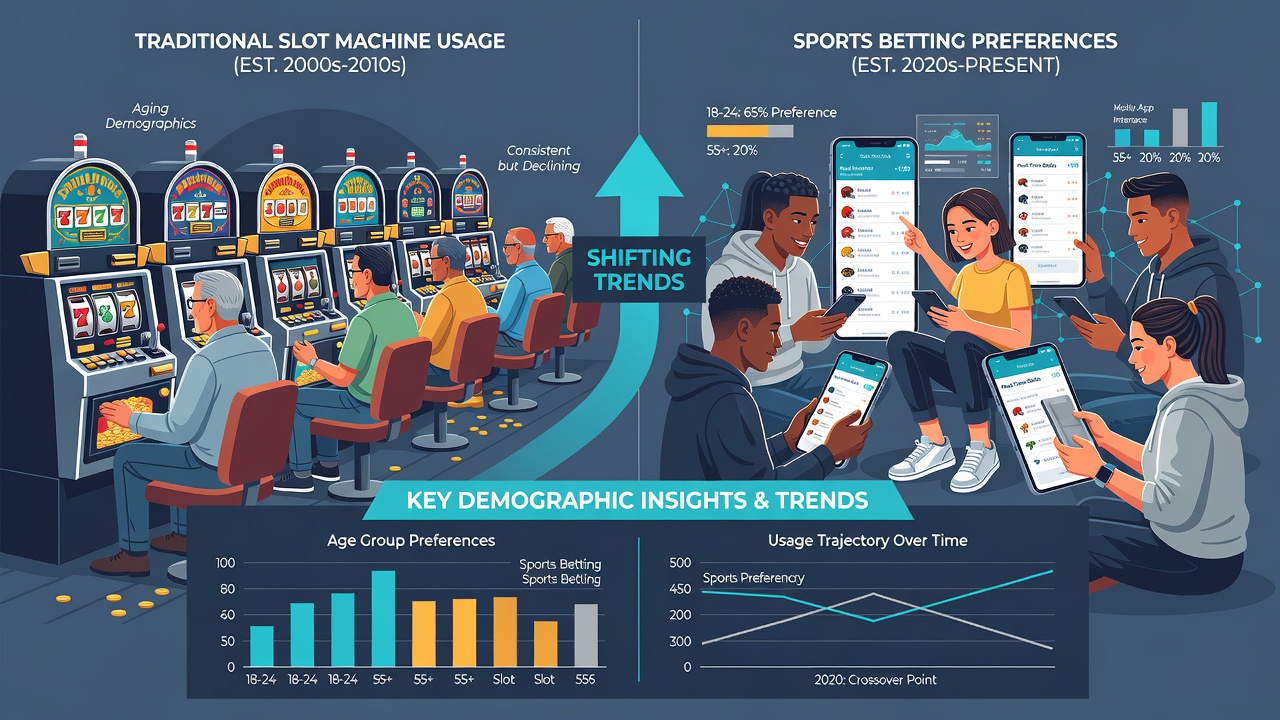
Regional differences appear pronounced when comparing North American and European data sources. In several EU member states, regulatory bodies document higher crossover between sports betting apps and online slots among urban residents, while rural populations demonstrate stronger loyalty to physical slot terminals. Canadian reports highlight similar divides, noting that provinces with professional sports franchises see elevated sports betting volumes among local residents compared to areas without major teams.
Platform Preferences and Spending Behaviors
Mobile technology adoption correlates strongly with sports betting uptake, as operators report that 81 percent of new sports accounts in 2025 originated from smartphone registrations. Slot machine usage, by comparison, splits more evenly between desktop online play and on-site casino machines, with older users showing higher retention on land-based equipment. Spending averages also diverge, with sports bettors typically placing smaller, more frequent wagers tied to specific matches, whereas slot players often engage in longer sessions with fixed bet sizes per spin.
Evidence from industry tracking organizations suggests that marketing strategies have adapted to these demographics, with sportsbooks emphasizing live streaming integrations and fantasy-style contests that appeal to tech-savvy cohorts. Casinos maintaining slot floors continue to invest in progressive jackpot networks and themed machines that resonate with established player bases who prioritize entertainment duration over outcome variability.
Conclusion
Available data through August 2026 illustrates persistent demographic segmentation between sports betting and traditional slot machine usage, shaped by age, gender, platform access, and regional regulations. Continued monitoring by gaming authorities and academic researchers will clarify whether these patterns stabilize or shift further as legal markets expand and technology evolves. teh distinctions remain measurable across multiple reporting agencies, providing clear indicators of how different population segments allocate their gambling activity.